
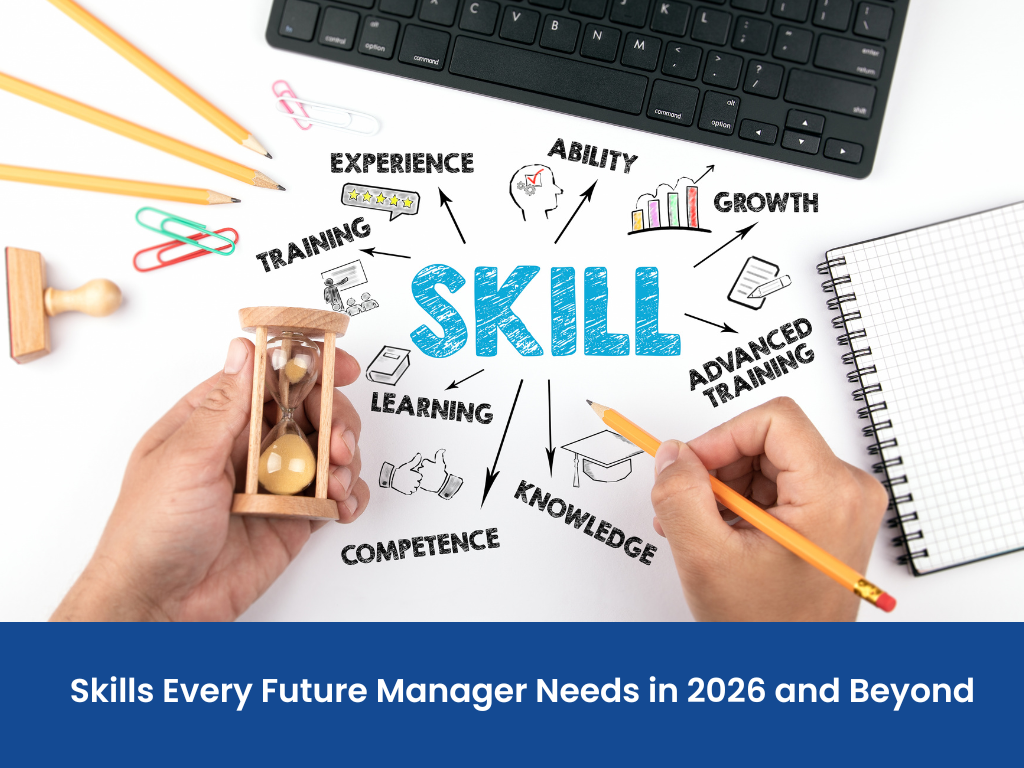
The world of management is undergoing a major transformation as we move into 2026 and beyond. Rapid advancements in artificial intelligence, automation, global connectivity, and digital ecosystems are reshaping how businesses operate. Managers are no longer expected to only supervise teams or execute plans; they are now required to be strategic thinkers, digital leaders, problem solvers, and culture builders. Traditional management knowledge is no longer sufficient on its own. Future managers must continuously upgrade their skills to stay relevant in an environment defined by uncertainty, speed, and innovation. The ability to adapt, learn, and lead in complex situations will define success in the coming years. This article highlights the most essential skills every future manager must develop to thrive in the evolving business landscape.
Strategic Thinking and Decision-Making
Strategic thinking is one of the most important skills for future managers because businesses are becoming more competitive and unpredictable. Managers must go beyond day-to-day operations and focus on long-term goals, sustainability, and business growth strategies. Future managers will be responsible for analysing market trends, understanding competitor strategies, and identifying opportunities for expansion. They must evaluate risks and benefits before making decisions and ensure that every action aligns with organizational objectives.
Digital Literacy and Technological Adaptability
In 2026 and beyond, digital literacy is no longer optional; it is a core requirement for every manager. Technology is now integrated into every aspect of business, from operations and marketing to finance and human resources. Future managers will need to understand digital tools such as AI-based platforms, automation software, cloud systems, and analytics dashboards. They must be comfortable working with digital workflows and adapting to new technologies quickly.
Emotional Intelligence (EQ)
Emotional intelligence has become one of the most critical leadership skills in modern workplaces. It refers to the ability to understand and manage one’s own emotions while also recognizing and influencing the emotions of others. Future managers will need to build strong interpersonal relationships, resolve conflicts, and motivate diverse teams. They must demonstrate empathy, patience, and active listening while handling employees and stakeholders.
Data-Driven Decision Making
Data has become the backbone of modern business decision-making. Future managers must rely on data rather than assumptions to make accurate and effective decisions. Managers will be expected to interpret reports, analyse performance metrics, and use data insights to guide business strategies. They must work closely with analytics teams to understand customer behaviour, market trends, and operational efficiency.
Leadership and Team Management
Leadership remains one of the most essential skills for any manager, but its meaning is evolving rapidly. Future managers must lead hybrid, remote, and culturally diverse teams while maintaining collaboration and productivity. Managers will be responsible for setting clear goals, guiding employees, and ensuring accountability within teams. They must inspire and motivate individuals while also supporting their professional development.
Communication and Collaboration Skills
Communication is the foundation of successful management. As workplaces become more global and digital, communication must be clear, concise, and effective across multiple channels. Future managers will need to communicate through emails, virtual meetings, presentations, and collaborative platforms. They must ensure that information flows smoothly across departments and stakeholders.
Adaptability and Change Management
The business environment in 2026 is highly dynamic, with frequent technological disruptions, economic changes, and shifting customer expectations. Managers must be highly adaptable to navigate these challenges. Future managers will be responsible for leading organizations through change, whether it is digital transformation, restructuring, or new business strategies. They must remain flexible, open-minded, and quick to adjust plans when needed.
Problem-Solving and Critical Thinking
Problem-solving is a core managerial skill that helps organizations overcome obstacles and improve performance. Future managers must think critically and approach challenges with a structured mindset. Managers will be expected to identify problems, analyse root causes, and develop effective solutions. They must evaluate multiple options before making decisions and consider both short-term and long-term impacts.
Financial and Business Acumen
Financial understanding is essential even for managers who are not directly working in finance. Future managers must understand how businesses generate revenue, control costs, and achieve profitability. Managers will be responsible for reading financial reports, managing budgets, and ensuring cost efficiency in their departments. They must also understand key financial indicators such as ROI, profit margins, and cash flow. Strong business acumen helps managers make decisions that support both operational efficiency and financial stability.
Innovation and Creativity
Innovation is essential for businesses to stay competitive in a rapidly changing world. Future managers must encourage creativity and continuously look for ways to improve products, services, and processes. Managers will be responsible for promoting new ideas within teams and implementing innovative strategies. They must support experimentation and create an environment where employees feel safe to share creative solutions. Innovation is especially important in areas like marketing, product development, and customer experience, where constant improvement is necessary.
Global and Cultural Awareness
As businesses expand across borders, managers must understand global markets and cultural differences. This skill is crucial for working with international teams and clients. Future managers will need to adapt their communication and leadership styles based on cultural contexts. They must understand international business practices, customer preferences, and market dynamics. Cultural awareness helps prevent misunderstandings and improves collaboration in global environments, making it an essential skill for modern managers.
Time Management and Productivity Skills
Time management is a key skill that helps managers handle multiple responsibilities efficiently. In fast-paced work environments, productivity plays a major role in organizational success. Managers will be responsible for prioritizing tasks, delegating responsibilities, and ensuring that projects are completed on time. They must also identify inefficiencies and implement systems that improve workflow. Effective time management ensures that teams remain productive and that business objectives are achieved within deadlines.
Conclusion:
The future of management in 2026 and beyond demands a new generation of professionals who are adaptable, tech-savvy, emotionally intelligent, and strategically driven. Managers are no longer just administrators; they are leaders who guide organizations through complexity and change. Developing skills such as digital literacy, data-driven decision-making, emotional intelligence, and innovation is essential for long-term success. Those who continuously learn and evolve will be better equipped to handle challenges and seize opportunities in the modern business world. Ultimately, the future belongs to managers who can balance technology with human understanding and strategy with creativity. JIMS Kalkaji, regarded as the best MBA college in Delhi, play an important role in shaping such future-ready professionals through industry-oriented learning and practical exposure. Those who continuously learn and evolve will be better equipped to handle challenges and seize opportunities in the modern business world. Ultimately, the future belongs to managers who can balance technology with human understanding and strategy with creativity.
