

ASSISTANT PROFESSOR
The marketing landscape has undergone a remarkable transformation over the past decade. Traditional approaches that relied on broad demographic segmentation are slowly giving way to more sophisticated strategies centred on individual customer needs. In this evolving environment, hyper-personalisation has emerged as an influential trend shaping modern marketing practice.
Hyper-personalisation refers to the use of artificial intelligence and real-time analytics to deliver highly relevant and customised experiences to individual consumers. Unlike traditional personalisation, which may involve addressing a customer by name or recommending products based on previous purchases, hyper-personalisation seeks to understand customer behaviour, preferences, and intent at a much deeper level.
The growing popularity of hyper-personalisation can be attributed to changing consumer expectations. Today’s customers interact with brands on various touchpoints, including websites, mobile applications, social media platforms, and online marketplaces. As digital interactions increase, consumers expect brands to provide experiences that are relevant, convenient, and tailored to their specific needs. Generic advertisements and mass communication strategies often fail to capture attention in a crowded digital environment.
Several leading companies have successfully demonstrated the power of hyper-personalisation. Amazon’s recommendation engine analyses browsing history, purchase behaviour, and product preferences to suggest relevant items to customers. Netflix uses viewing patterns and engagement data to recommend movies and television shows that align with individual interests. Similarly, Spotify creates personalised playlists such as “Discover Weekly” by analysing listening habits and predicting musical preferences. These examples illustrate how organisations are leveraging technology to deliver unique experiences that enhance customer satisfaction and engagement.
At the heart of hyper-personalisation lies data. Every digital interaction generates valuable information about customer behaviour. Website visits, search queries, clicks, purchase history, location data, and social media engagement collectively contribute to a comprehensive customer profile. Advanced analytical tools process this information and transform it into actionable insights. As a result, marketers can communicate with customers at the right time, through the right channel, and with the most relevant message.
Artificial intelligence has accelerated the adoption of hyper-personalisation. AI-powered systems can analyse vast amounts of data in real time and identify patterns that would be difficult for humans to detect. Predictive analytics enables organisations to anticipate customer needs before they are explicitly expressed. Such timely interventions improve customer experience while increasing the likelihood of conversion.
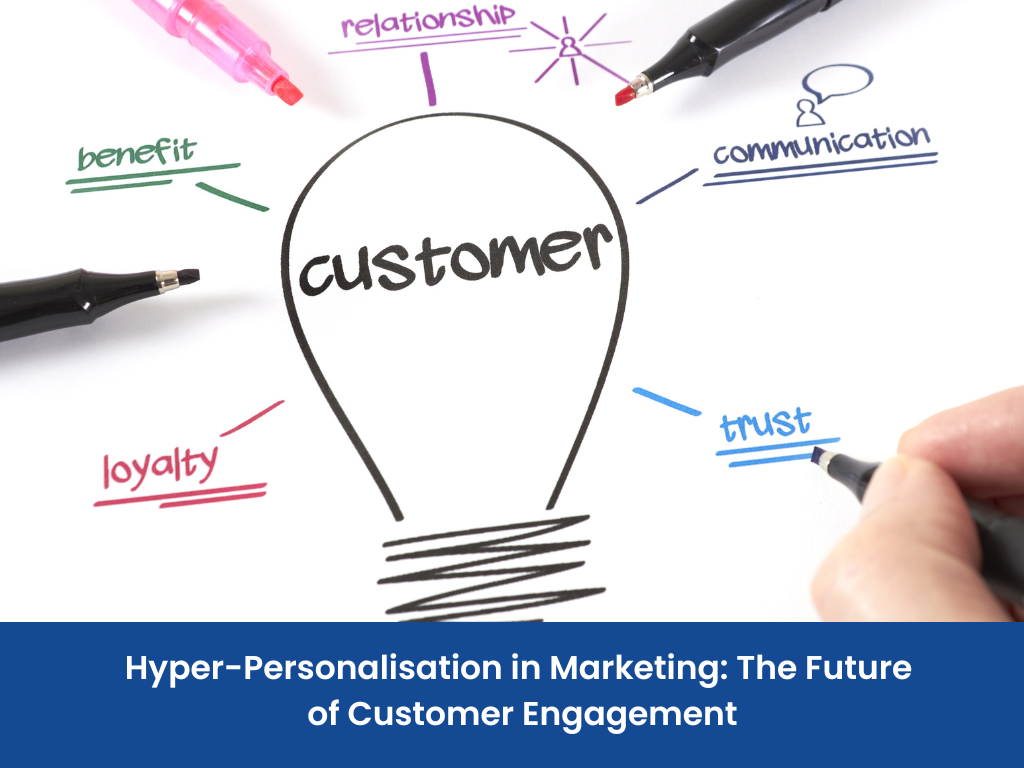
The benefits of hyper-personalisation extend beyond improved sales performance. Customers increasingly value brands that understand their preferences and provide meaningful interactions to deliver relevant content and recommendations. Personalised experiences foster stronger emotional connections, build trust, and drive long-term loyalty.
From an organisational perspective, hyper-personalisation improves marketing efficiency. Rather than allocating resources to broad campaigns aimed at large audiences, marketers can focus on individuals with a higher likelihood of engagement. This targeted approach enhances campaign effectiveness, improves return on marketing investment, and reduces wasted expenditure.
However, implementing hyper-personalisation is not without challenges. Data privacy remains a significant concern. High-profile data breaches and growing regulatory scrutiny have heightened public awareness regarding privacy rights. Consequently, organisations must ensure transparency in their data collection practices and obtain appropriate customer consent.
Another challenge involves managing and integrating data from multiple sources. Customer information often resides across different platforms and systems, creating data silos that hinder effective personalisation. Organisations must invest in robust customer data platforms and analytics capabilities to develop a unified view of the customer.
Furthermore, marketers must be cautious of over-personalisation. While customers appreciate relevance, excessive targeting can sometimes appear intrusive. Receiving advertisements immediately after discussing a product or encountering highly specific recommendations may create discomfort among consumers. Ethical considerations should therefore remain central to any hyper-personalisation strategy.
The future of hyper-personalisation appears promising. Advances in generative AI, predictive analytics, and customer data platforms are expected to enhance further marketers’ ability to create personalised experiences at scale. Real-time decision-making systems may soon enable brands to adapt content, offers, and communication dynamically in response to customer behaviour in the moment.
For management students and marketing professionals, understanding hyper-personalisation has become increasingly important. It represents a shift from mass marketing towards customer-centric engagement, where technology and data-driven insights play a pivotal role in value creation.
In a marketplace characterised by intense competition and evolving consumer expectations, hyper-personalisation is no longer a luxury. It has become a strategic imperative that enables organisations to deliver superior customer experiences and strengthen their market position. With technology upgrades, the ability to understand and serve customers at an individual level will define the next generation of marketing success.
